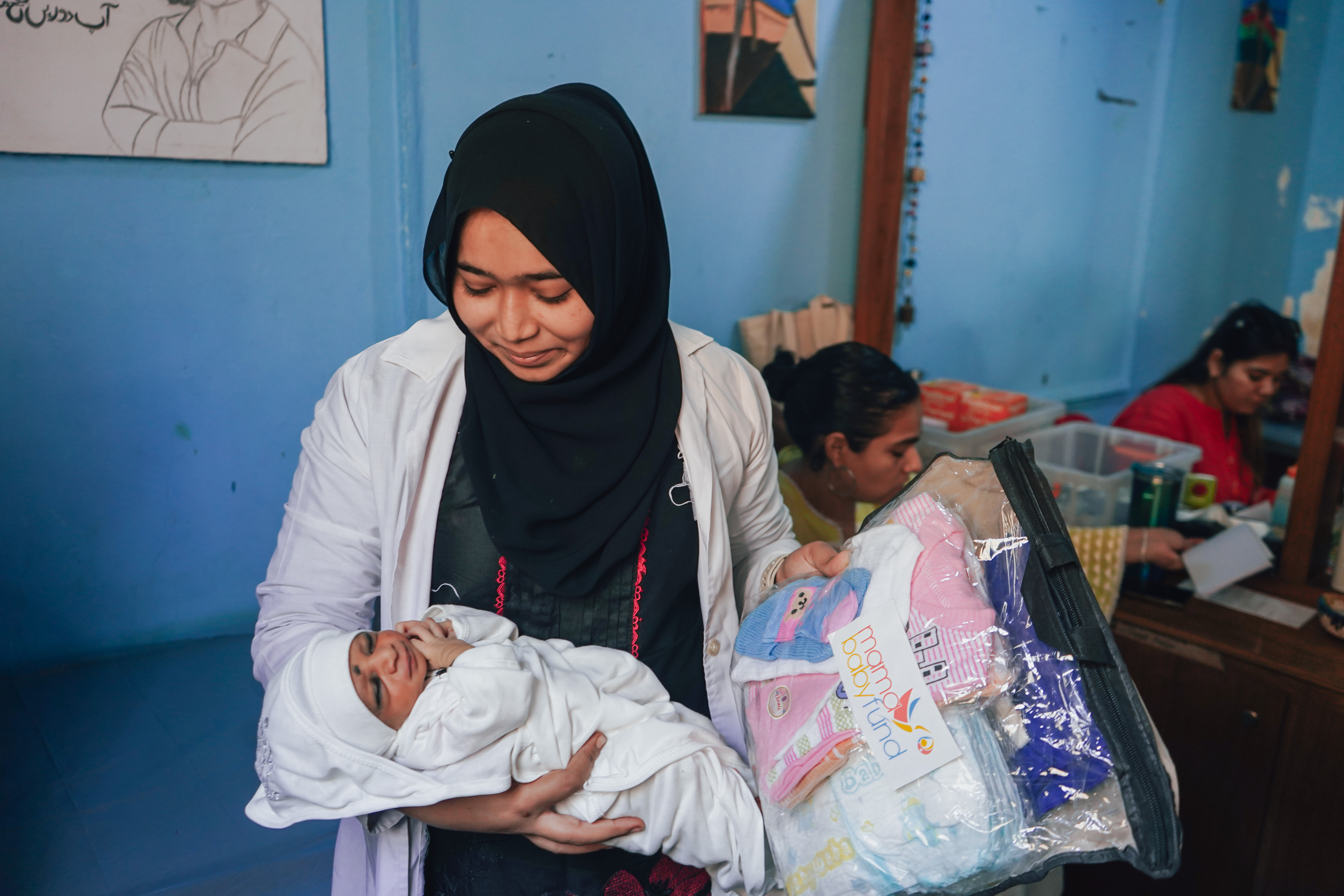
Over the five years midwife Neha Mankani has aided pregnant women at a clinic on steamy Baba Island, off the coast of Karachi, she has watched summer heat intensify – and the women who cannot escape it suffer.
Second trimester pregnancy losses – once uncommon – are growing. Many women who become dehydrated in the heat go into premature labor and lose their babies, while others deliver children in inhuman temperatures nearing 50 degrees Celsius (122 degrees Fahrenheit).
“In the newborns there are lots of adverse effects. Many end up with neurological, cardiac or respiratory issues – and a lot of it is because of heat,” the Pakistani midwife said during an event at London Climate Week organised by HERA.
“I’m really terrified to know how hot it’s going to be in five years. I don’t want to think about that,” added Mankani, an expert with HERA’s Heat Science Hotline. “Right now we’re really unprepared for this kind of heat.”
Getting better protections in place for women facing extreme heat is crucial as, year by year, continuing use of oil, gas and coal drives global temperatures to new records, experts say.
For pregnant women those may include measures ranging from loans of solar-powered fans to help them stay cooler in stifling homes to creating heat insurance for pregnant women that could help them access cooling, pay for medical care or temporarily ease their workload during extreme heat.
HERA Materna, the first parametric insurance policy aimed at pregnant women, is expected to launch in 2027 in New Delhi and in the Indian state of Gujarat, covering about 30,000 women.
“Women have to continue to work relentlessly in the heat. If you don’t work you don’t eat,” noted Bijal Brambhatt, executive director of India’s Manila Housing Trust, a development organization which will help deliver the insurance effort with HERA.
MONTHLY CHALLENGE
Increasingly extreme heat is affecting women’s reproductive health across their lives, experts say, from their menstrual cycles to their experience with menopause.
In Thailand, women motorcycle taxi drivers say the oppressive heat is making their monthly period heavier, causing more pain and the need for more frequent stops to change menstrual pads – but also embarrassment when the smell of their sweat and their blood-filled pads in the heat puts off passengers.
“Women say customers don’t want to ride with them because of the odor,” said Visala Annamalai, a program manager for HERA. “It’s a significant health impact but also a financial impact.”
Other women, meanwhile, report that growing heat seems to be making their menstrual cycles less regular – and relentless heat can make the hot flashes associated with menopause harder to tolerate.
But the most serious impacts are on pregnant women, especially those trying to continue earning a living as heat extremes grow.
LOSING PREGNANCIES LATE
Women working in India’s salt pans used to stay at home starting at seven months of pregnancy, said Dr. Rajvi Joshipura, who works with SEWA, India’s Self Employed Women’s Association. But as earning a living grows harder, in part because of climate change impacts including more heat, more are choosing to keep working later in their pregnancy in the harsh conditions, she said.
That has led to several recent cases of women losing their babies late in their pregnancy – a problem also seen among female construction workers, Joshipura said.
Such losses have mental as well as physical impacts, she said.
“You lose a child you are nurturing, then there’s a vicious cycle of depression, and having to borrow money” for medical treatment, she said.
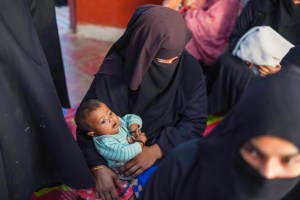
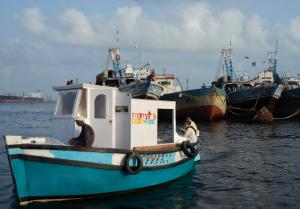

Brambhatt, of the Mahila Housing Trust in India, said women often have nowhere to turn for help and advice, and are accustomed to putting the needs of others first, which can impact their physical and mental health.
“In countries like ours, living in joint families, women are constantly conditioned to give,” she said. Many women live with their husband’s parents and are tasked with a big range of household chores, including cooking, caring for children and the elderly and fetching water, under the supervision of their mothers-in-law.
“When they go to their mothers or mothers-in-law for advice, pregnant women do not get much sympathy. The (older) women say I managed to have five children” – but younger generations face more challenges than they did, including extreme heat, Brambhatt said.
“So, often just to prove you can do as they did, you ignore so many signs you get as a pregnant woman” that point to threats to the pregnancy, she said. “Everyone thinks about the baby; no one thinks about themselves.”
The need for greater self care for women is also crucial for medical staff like Mankani’s midwives, who also labor long hours in relentless heat alongside their patients.
Such brutal heat exposure “impairs judgement”, Mankani said, and makes it “hard to provide respectful and quality care.”
Studies in Zimbabwe and South Africa found that “respectful care” was reduced on hotter days in maternity clinics, with women giving birth left more frequently left alone to push on their own, said Giorgia Gon, an epidemiology associate professor at the London School of Hygiene and Tropical Medicine.
Cailyn Costello, an Irish midwife, said she also sees older midwives shaming pregnant women who repeatedly come into her clinic with pre-term contractions during heat spikes – a problem that is growing as heat leads to more dehydration among pregnant women.
“They say, ‘You don’t know your body, you should know to drink more water or rest’,” Costello said at the London Climate Week event. “We’re trying to introduce new understanding that is not the woman’s fault.”
NEW PROTECTIONS?
Better protecting pregnant women may require everything from creating new laws setting indoor heat standards to persuading other family members to take on pregnant women’s chores late in their pregnancies when conditions are hot, experts say.
Laura Clark, the CEO of environmental organization Client Earth, said governments at a range of levels, as well as housing authorities, employers and others, will need to set new legal protection frameworks for the kind of heat “that is terrifying all of us.” As heat impacts swiftly grow, such protective measures need to swiftly go beyond simple pilot projects, she said.
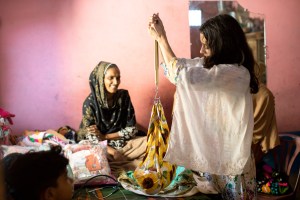

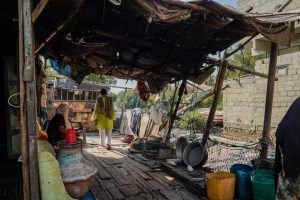
In rural Kenya, some communities are experimenting with having husbands and other family members take on some of pregnant women’s chores, including fetching water and selling bags of charcoal on the side of the road, during hot periods, said Gon, of the London School of Hygiene and Tropical Medicine.
But the effort to change culture, based on information about growing risks to pregnant women, “has not been an easy task,” she said, with some men who helped their wives then ostracized by other men.
For now, as threats from extreme heat grow, many pregnant women have little choice but to keep working.
In Bangkok, Supaporn “Koi” Charoenchaithanwonchit, works long hours in the heat as a motorcycle taxi driver, bringing in about $10 a day. During her most recent pregnancy, she began to feel abdominal pain but pushed through it, worried about losing income. When she began bleeding, a doctor confirmed she had miscarried.
After buying a hot compress to help with the pain, she was soon back at work.