Thailand

Thailand

In Thailand, our work focuses on raising awareness of the impacts of extreme heat on women’s health and livelihoods, activating our partners, and co-designing solutions with women working in the informal economy so they can prepare for, endure, and recover from dangerous heat.

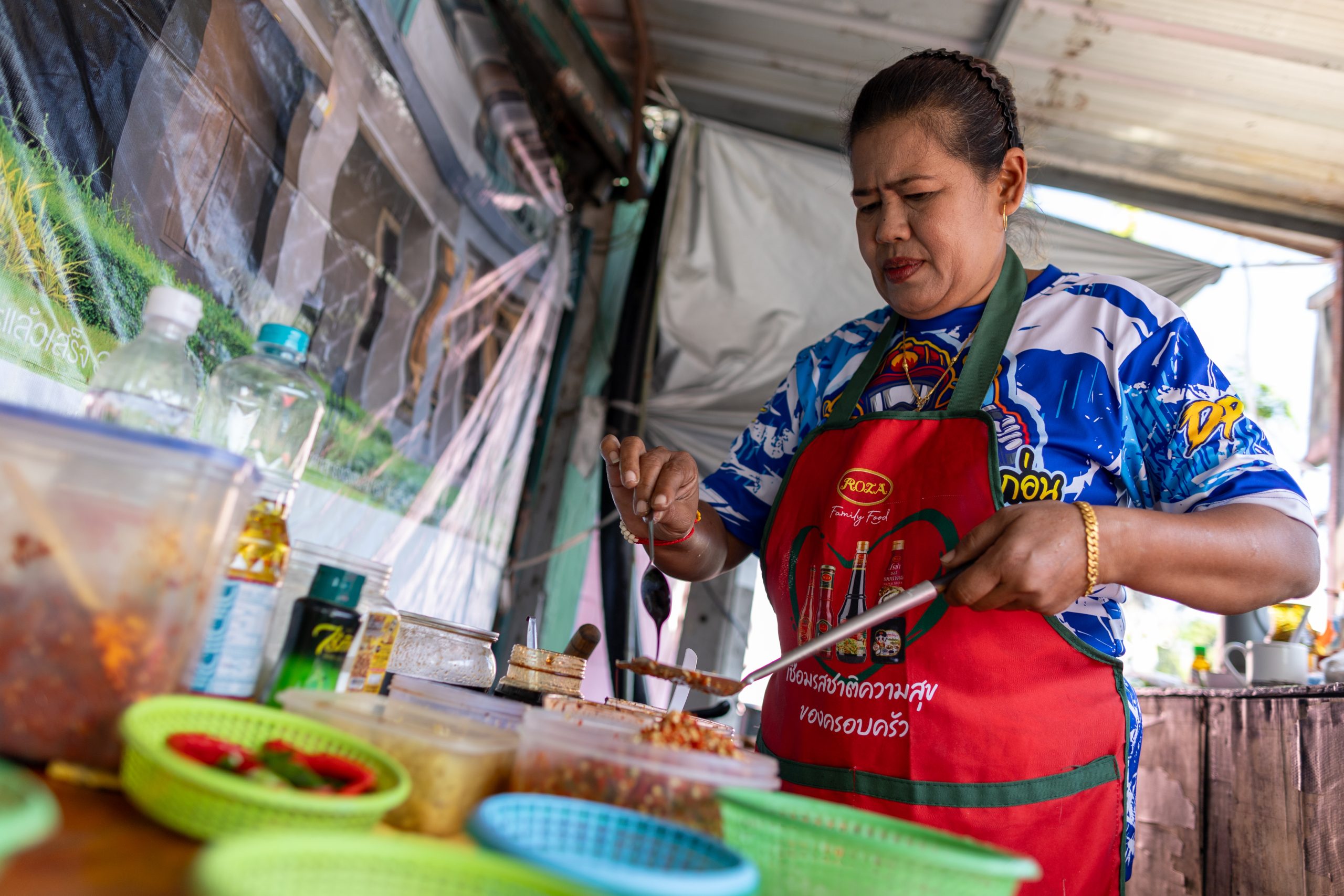
More than 11 million women in Thailand earn their living in heat-exposed informal trades such as street vending, motorbike transport, domestic care, and home-based production. They are often primary earners whose income sustains household stability, education, and health, while powering local and national economies. Yet they face escalating heat impacts with limited protection.

HERA works alongside these women and grassroots partners like HomeNet to catalyze gender-responsive solutions specifically tailored to the urgent needs of Thailand’s women informal workforce—advancing solutions that reduce risk, protect livelihoods, and turn extreme heat from an unchecked daily threat into a shared challenge met with collective resilience.

Thailand Mayuree Gingsawas prepares a meal for her customers in Khlong Toei, a district in Bangkok, Thailand. Climate Resilience for All/Patipat Janthong

Program Highlight

Building Heat Literacy and a Foundation for Action

HERA’s work in Thailand is grounded in deep engagement and evidence-building, listening to women and prioritizing their lived experiences as the foundation for solution co-design and delivery. To build this foundation, HERA and our partners have convened 20 workshops and focus groups, engaging more than 260 women informal workers across Thailand.

These meetings:

  • Built a new and deeper understanding of how extreme heat is impacting their health, livelihoods, and daily well-being.
  • Provided a platform for women to share individual experiences and strategies for lessening the impacts of extreme heat—such as working at night, wetting clothing, taking extra baths, and seeking shade.
  • Laid the foundation for collaborative action to address these impacts and together identify and test financial and non-financial solutions that can help women prepare for, endure, and recover from periods of dangerous heat.

The women’s lived experiences are shaping locally grounded responses—from income protection mechanisms and workplace adaptation strategies to community-based health solutions. By building heat literacy and collective platforms, women are moving from isolated coping to coordinated action.