As heat shifts farming hours, Kenyan women find themselves out of a job

“Nowadays it is too hot. By early morning the sun is already out and it gets hot very early in the day”
By Nelly Madegwa
Women’s collective labor groups – known as “lisanga” in the local Isukha language – have for decades been a backbone of farm work in Kakamega County in western Kenya.
The women, known for the quality of their tilling and weeding, once were at the top of landowners’ hiring lists. But today many of them are sitting at home, watching jobs that were once theirs go instead to men.
That is largely because extreme heat is forcing a shift in working hours in the fields, to early mornings when women are busy with cooking and other household chores.
“The men just wake up and get the jembe (hoe) and leave for the farm, but for us women you can’t do that because you have children and you need to make sure you make them breakfast and help them get ready for school,” said Jenipher Sore, a member of her work group for a decade.
That means “farmers have used the group less and less,” she added. “They use men more frequently and that has meant less money for us, making it harder for us to provide for our families.”


Around the world, an increase in extreme heat as a result of continuing use of oil, gas and coal is shifting work patterns and making many jobs more difficult or dangerous. That is particularly true for women workers, whose jobs are often informal and whose household and family duties make it difficult for them to adapt to changing schedules.
Many women in Kakamega are already up by 4 am and not asleep until midnight in order to manage their households, children and work, said Violet Ombaka, executive director of the Women Pillar Alliance, a women’s rights organization in the county.
“We cannot reach a point where we are denying women work that helps to feed their family because of the heat,” she said.
NEW HOURS, NEW WORKERS
Women’s collective farm labor in Kakamega once followed a simple pattern: Women prepared breakfast for their children, made lunch for later, cleaned, and only then set out for the farms, working from around 8 a.m. to 3 p.m.
A share of their wages were retained by the group’s secretary, providing a communal savings fund that women could borrow against – a buffer against hard times.
Women were proud of their skills and their ability to bring in an income, even though they earned less than men doing the same job.
“We do a good job and know how to till and weed better, unlike the men who will rush to finish,” said Violet Mukhanyi, 45, one of the laborers from Shabwali village. She explained that men would often cover weeds with soil instead of doing the harder work of uprooting them so they wouldn’t sprout again.
“The men just wake up and get the jembe (hoe) and leave for the farm, but for us women you can’t do that because you have children"
Jenipher Sore, Kenyan farmworker
She began working as part of the collective two years ago, after the birth of her second child.
“I joined because I was having difficulty feeding my children and buying basic needs for the family,” she said.
Emily Khakali, 55, a founding member of Mukhanyi’s group and now its secretary, said her “lisanga” started in 1995, with 12 members, and through the years the money she earned allowed her to educate her four children through secondary school.
“You would use the savings for your children’s school and investing in projects like rearing chickens,” she said, noting the groups worked so well the original one split into three new work collectives.
Hiring women was also cheaper for farm owners, with women paid 20 percent less a day than men for the same work, Khakli said.
But that advantage is disappearing as more extremely hot days make working traditional hours in the field challenging, pushing landowners to shift labor to earlier hours of the day.
HOT BY 8 AM
In Kakamega, the baking sun makes fieldwork very hot even early in the day, workers agree.
“Nowadays it is too hot. By early morning the sun is already out and it gets hot very early in the day compared to 10-15 years ago,” Mukhanyi said.


Patricia Nying’uro, a climate scientist with the Kenya Meteorological Department, said records show western Kenya has now warmed up to 2.1 degrees Celsius above historical levels, higher than the global average.
“Temperatures across Kenya have risen significantly,” she said, pointing to longer stretches of extreme heat across the country.
To deal with the worsening heat, male farm laborers have shifted their work to very early mornings.
“They try to make sure that by the time it starts getting hot they are done,” Mukhanyi said. “They start work as early as 6:20 am and leave at noon, before it gets too hot.”
Farmers noticed the men, working through cooler periods, needed to take fewer breaks than the women, who were still working traditional hours.
“The farmers would say that the men were faster and finished work quicker,” Mukhanyi said – and soon women were no longer getting as much work, even though their work was higher quality, she said.
Sore, who works with a different women’s collective, said her group shifted its start time to 7:30 am in response, finishing work by 1:30 pm rather than the previous 3 pm. But the women still needed to start a little later than men, which left them working in hotter periods.
“Farmers have used the group less and less,” she said.

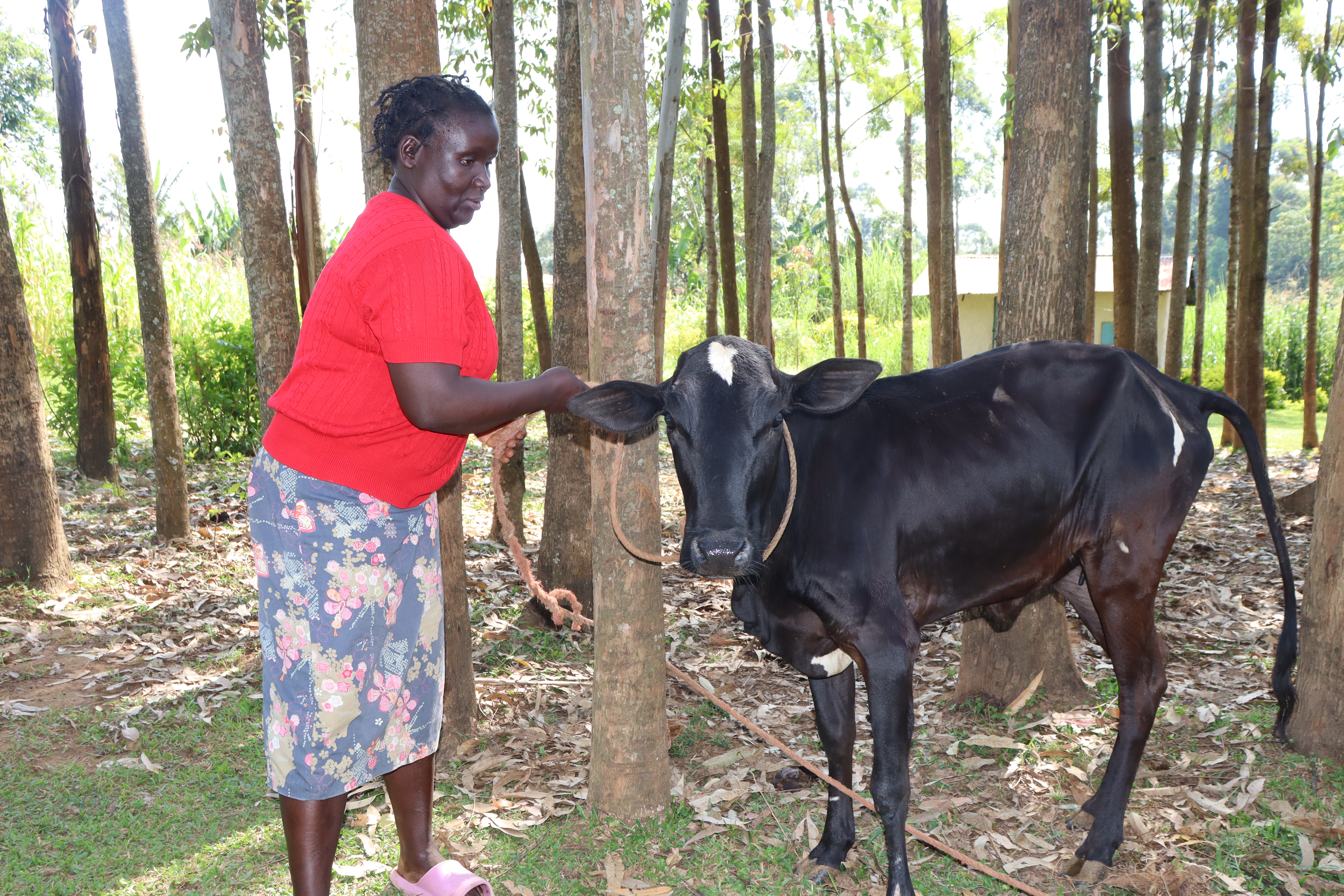
MORE HEAT, SLOWER WORK
Mary Khasiali , a landowner who has hired women’s groups for years, said women’s groups usually arrive about 8 am, and sometimes later, “because some don’t live near the farms they work on, so they have to walk over after finishing household chores.”
When the day’s heat sets in, “it interferes with how efficiently they work,” she said. “They get tired faster and need more frequent water breaks, and a job that should take one day sometimes stretches into two, which costs you extra since you have to provide breakfast and lunch twice.”
Men, by comparison, arrive as early as 6:20 am and finish before the heat peaks, Khasiali said.
She acknowledged that the women do better work – but said it now works out cheaper to have the men do the tilling, even if they don’t always do as good a job.
We cannot reach a point where we are denying women work that helps to feed their family because of the heat
Violet Ombaka, executive director, Women Pillar Alliance
Fewer bookings mean more women are now sitting at home on days they once would have spent in the field. For some that means going days without wages, while hoping the next call comes soon. But others have been forced to look for other opportunities, such as Mukhanyi, who has taken a job as a domestic worker.
That shift increasingly threatens to undermine the women’s collective labor groups that for decades have been a source of support and savings for women in the rural community.
“Since I left (the collective), more members have left. It’s not as it used to be,” Mukhanyi said.
Ombaka, of the Women Pillar Alliance, said the women’s collectives have little way to respond to the changing conditions – and the women’s slower pace of work in the fields is a natural outcome of their long days and many burdens, particularly with heat extremes rising.
“By the time she gets to the farm she has very little energy, and so she only goes because she has no option,” Ombaka said, calling for community awareness campaigns about heat and its impact on women, and for restructured workdays, with field workers allowed a break in the hottest part of the day and a return to work later in the afternoon. Childcare provision for young children is also needed, she said.
“The heat is the result of climate change. It calls for a collective responsibility,” she said.