As kitchen heat grows unbearable, Indian women find ‘there is no escape’

“I've developed severe heat rashes. My husband and son don't have these problems”
By Priyanka Thirumurthy
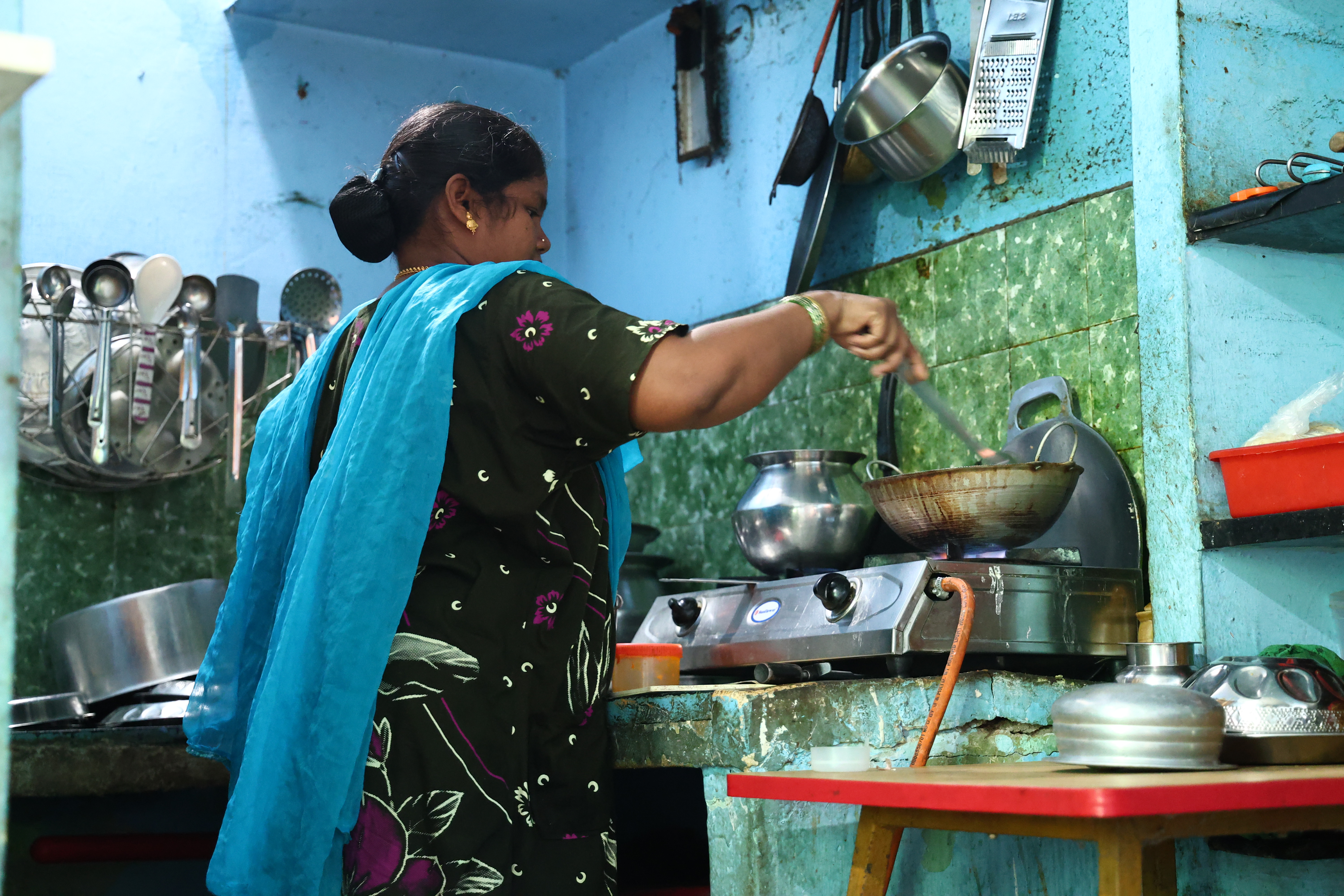
Since she was a teenager, 36-year-old Farheen Sethi has cooked three meals a day for her family on a traditional earthen stove. But the extreme heat that now pervades her tiny single-room shack in New Delhi’s densely populated Sunder Nagri area increasingly makes the work unbearable.
“This summer I fainted while cooking in the afternoon heat. My blood pressure shot up and I was found unconscious twice in just 20 days. The doctor told me it is because of extreme heat,” she said.
The men of the house have not been similarly affected. “It becomes too hot for them to stay inside when I cook, so I send them outside,” she admitted.
As India endures brutal summer temperatures, the most punishing heat many women face is not on the street but at their own stove.
"I have no choice. This is my fate."
Rani Jhawarl, Chennai housewife
The kitchen is often the hottest room in the house and whether families are poor or wealthier it is usually women who absorb the heat.
Indian women, on average, spend over seven hours a day on unpaid domestic and caregiving work, government data shows, roughly four hours more than the men they live with.
Globally the gap between women’s and men’s domestic and caregiving work is 2.8 hours.
Because kitchen heat exposure is indoors and unpaid, it is unregulated by labour laws and occupational safety rules, and often overlooked when assessing heat threats.
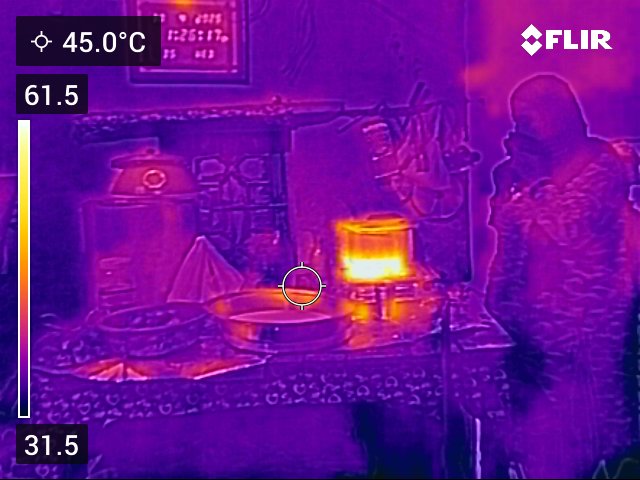
But kitchen heat is increasingly reaching dangerous highs, as continuing use of oil, gas and coal drive global heat extremes. Thermal imagery captured by the non-profit Greenpeace India in Sunder Nagri in the summer of 2025 recorded surface temperatures of 61.5 degrees Celsius (143 degrees Fahrenheit) around the cooking area in homes like Sethi’s.
Using thermal cameras, researchers from the Indian non-profit group Heatwatch similarly found in May that temperatures inside kitchens in Bengaluru’s low-income settlements were 2-7 degrees Celsius hotter than surfaces on the outside of the homes.
“When we think about heat vulnerability, we often picture people working outdoors in agriculture, construction or street vendors. But for millions of women, especially in South Asia where women spend nearly 58% more time indoors than men, one of the most consistent sources of heat exposure is inside the home, particularly in the kitchen,” said Ronita Bardhan, a professor of sustainable built environment and health at the University of Cambridge in the United Kingdom.
‘A HEAT TRAP’
Kitchens can be especially hot places because the materials in place around them absorb the heat emitted during cooking, they frequently lack cross-ventilation and they are generally small and enclosed.
“Historically kitchens have been treated as functional service spaces rather than spaces designed for comfort, health or wellbeing. Because domestic work has long been viewed as routine and invisible, the thermal performance of kitchens has rarely been a design or health priority,” Bardhan said.
In dense urban environments, with limited airflow between buildings and a greater build-up of heat because of the urban “heat island” effect, the problem can be even worse, said Vybavi Samakam of HeatWatch Foundation, an associated research arm of HeatWatch.
But kitchen heat is often a problem for just one sex: women. Experts say that is a reason it has received too little attention.
“Since women primarily use kitchens, heat within this space is historically not assessed or addressed,” said Aravind Unni, an urban rights activist and researcher based in New Delhi.
“Indoor heat has only emerged as a concern recently, because it is a space largely occupied by women and children. So far only outdoor heat has made it to policy documents and heat action plans,” he said.
Even wealthy women are not immune from kitchen heat. In an affluent Chennai neighbourhood, 27-year-old Rani Jhawar, who asked that her real name not be used, spends nearly six hours a day cooking in a kitchen with neither a window nor an exhaust fan.
“In our Marwari household I have to wear a silk saree and keep my head covered while cooking,” she said. “I have rashes all over my thighs and near my genitals because I sweat so much.”
Despite the family’s wealth she has no help cooking, as caste norms forbid outsiders in the kitchen.
“I have no choice,” she said. “This is my fate.”
NIGHT-TIME HEAT
The heat toll on women from long hours in the kitchen is amplified by worsening heat at night, which can limit their ability to recover after a day of heavy heat exposure.
A study published in May by research consultancy Climate Trends found that Chennai’s night-time temperatures rarely fall below an average of 31 degrees Celsius, said Naveen Puttaswamy, an associate professor at Sri Ramachandra Institute and one of the researchers on the study.
This is part of a broader trend of warming summer nights over the past decade in cities from Mumbai to Delhi.
Women exposed to longer periods of heat each day say most of the problems they face from it are managed at home and rarely spoken of – which can mean they are not formally recognised and rarely counted in official health data.
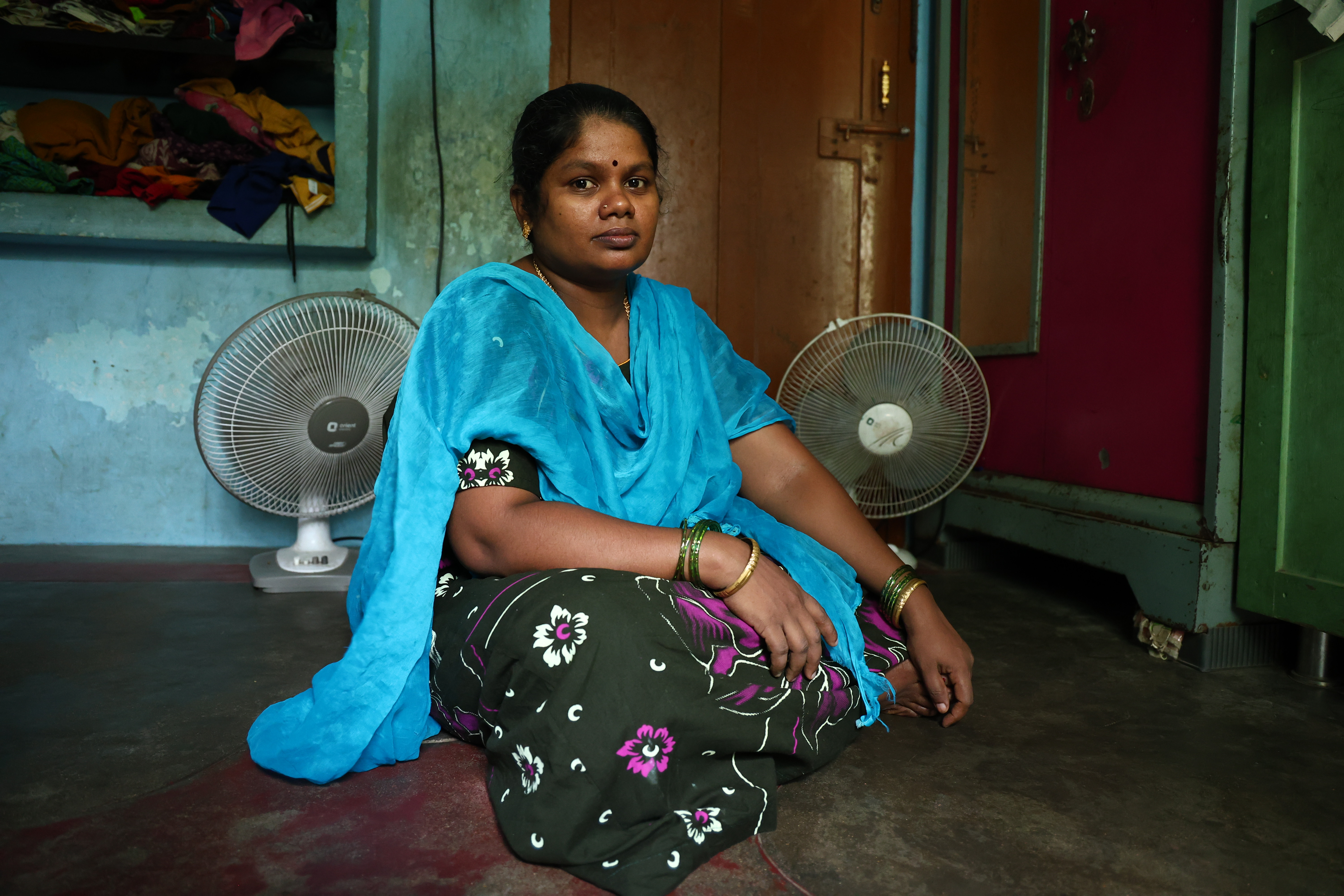
“In addition to rashes and boils, my period is coming erratically,” said 30-year-old Sunitha, who cooks in a Sunder Nagri room with no ventilation. “I feel very giddy when cooking. There is no escape.”

MENTAL HEALTH THREATS
Prolonged heat exposure is also creating growing mental health challenges, especially for women with few options to seek relief.
“When a woman is shut indoors and spends hours in front of a burning stove to cook for a family of five, her well-being takes a dip,” said Saumya Shrivastava, who leads on gender and climate issues at Asar Social Impact Advisors, an organisation working on climate action and resilience.
“Our interactions with communities reveal real mental distress and a sense of helplessness at facing something this extreme with no way out,” she said.
Because the labour is unpaid and expected, she said, it is not recognised as work or for its level of risk.
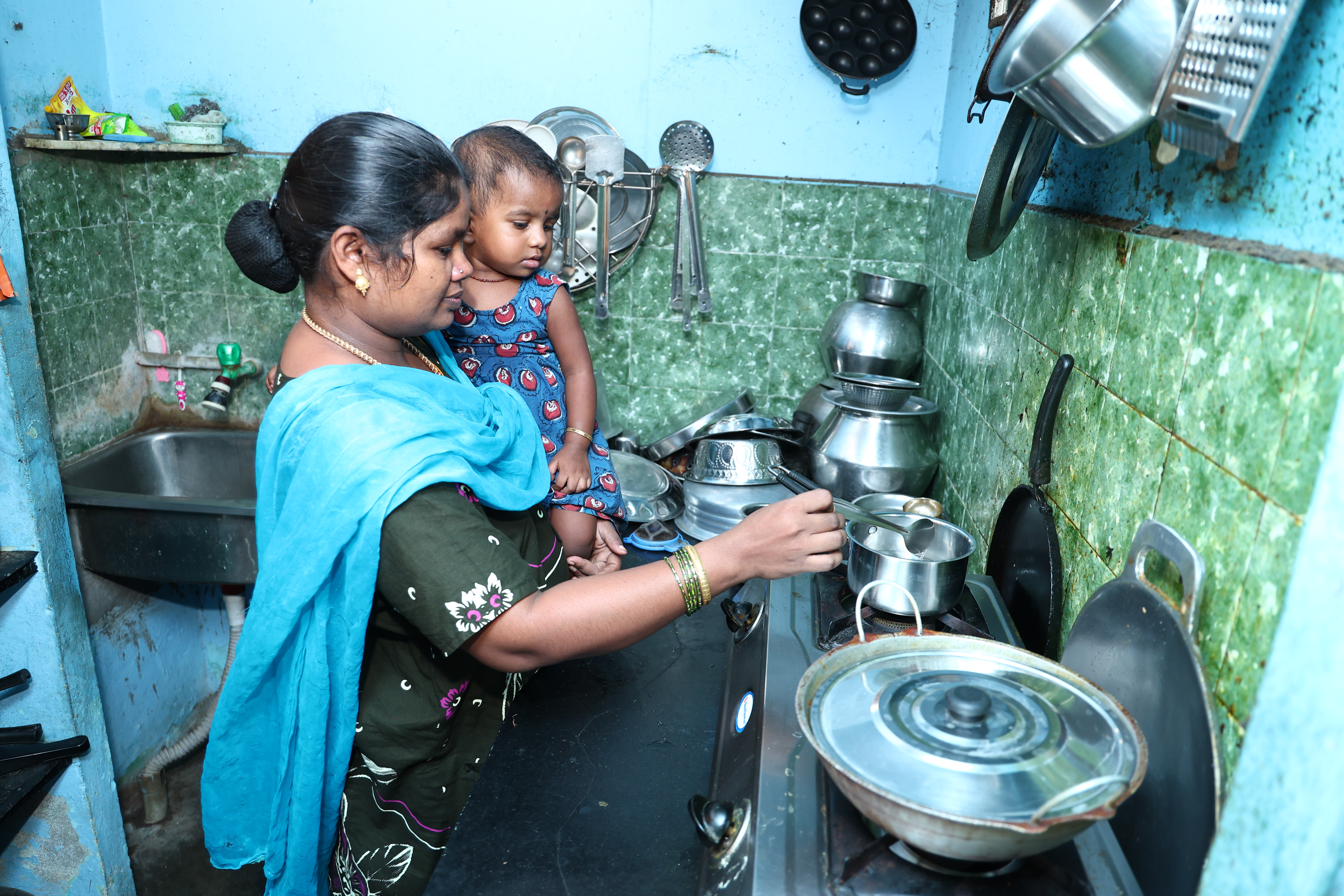
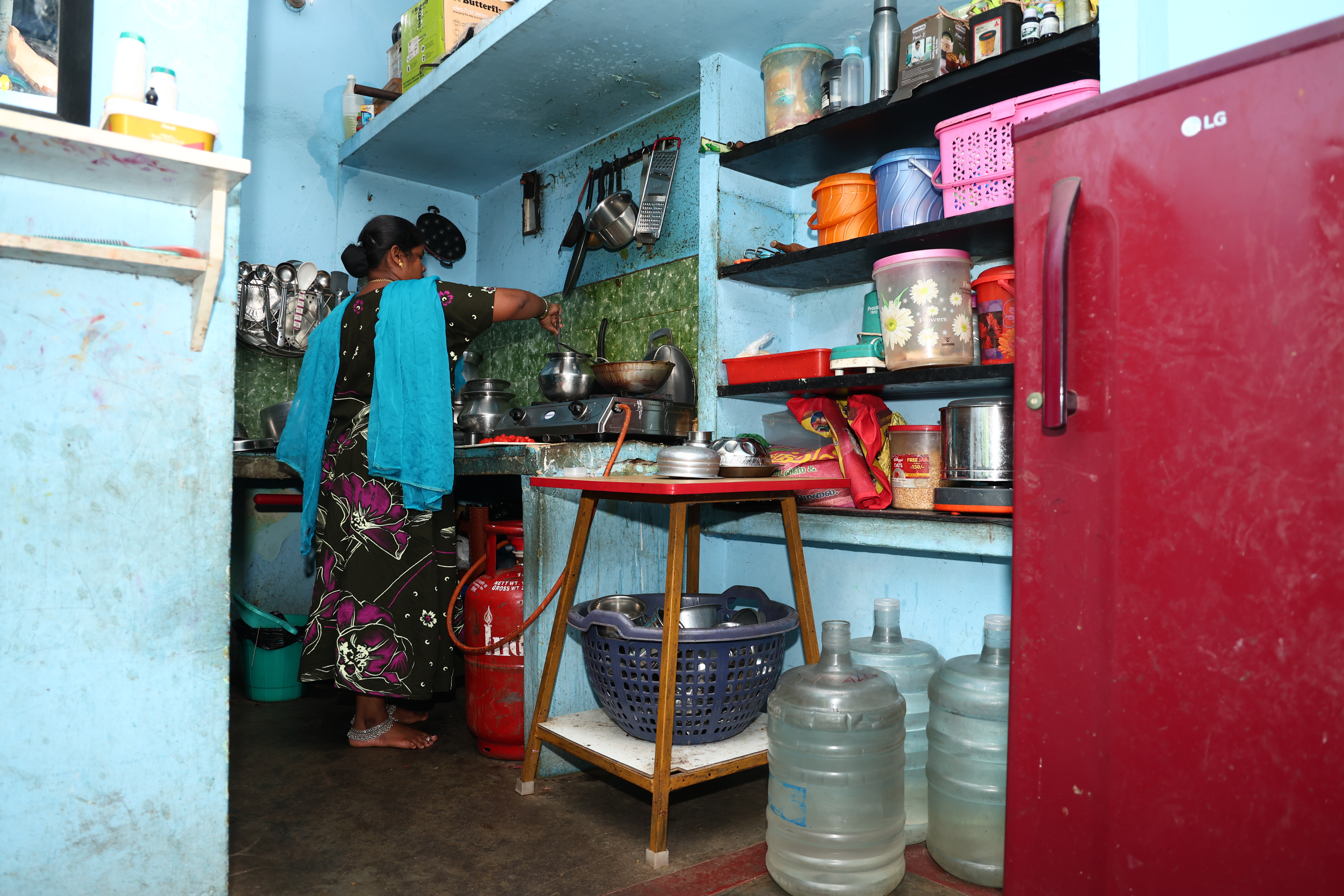
In a suburb of Chennai, 33-year-old A. Induja makes lunch in a tiny cramped kitchen with no window or exhaust fan, only a small opening to the living room.
It is just past 1.30 pm and temperature data loggers record her living room and outside temperatures as about 33C. The temperature in the kitchen, however, is 37C. She keeps wiping sweat from her forehead as she chops.
“I’ve developed severe heat rashes,” she said. “I carry my one-and-a-half-year-old daughter while I cook, and she has developed the same rashes. My husband and son don’t have these problems.”
The family cannot buy its way out of the situation. Her husband, a mechanic, earns a wage that barely covers their rent. The 2,500 rupees ($26) they spent on a table fan was a strain – and it doesn’t help while Induja is cooking as “it disturbs the flame,” she said.
A kitchen exhaust fan would provide some relief “but we can’t afford to install it,” she added.
Home design differences do provide a small measure of relief for some women.
In a two-bedroom house a few kilometres from Induja’s, 25-year-old Ajitha is also cooking – but her kitchen has a window. The heat is still oppressive, with a thermometer recording the heat as 35C in the kitchen, but at least it’s no higher than the rest of the house, the device showed.
HEAT STANDARDS NEEDED
Ensuring greater protection for women working in the kitchen may require setting government standards for the design of kitchens, including ventilation standards, and ensuring those least able to afford the changes have means to pay for them, said Vaishali Upadhyay, a climate and energy campaigner for Greenpeace India.
Changes such as better shading and reflective roofs can also reduce indoor heat, said Bardhan of the University of Cambridge.
“India has made significant progress in developing heat action plans, particularly around early warning systems, emergency response, and protecting outdoor workers. However, indoor heat remains a major blind spot,” she said.
“Heat action plans need to expand beyond outdoor temperatures and recognise that homes, kitchens, and informal settlements are critical locations where people experience heat every day. Integrating housing improvements into heat adaptation strategies would make these plans far more effective and equitable,” she said.
Government programs such as Pradhan Mantri Awas Yojana – which provides affordable housing to poorer and moderate-income families – may also need to pay more attention to cooling, said Samakam, of HeatWatch.
The program since 2024 has encouraged passive cooling, promoting measures such as natural ventilation, careful placement of windows and use of cool roofs “but they target housing design broadly, not the kitchen as a site of heat exposure,” she said.
Solutions need to recognize the particular challenges women face with extended exposure to heat, researchers said.
“When a man goes out to work, it’s to earn an income and often by choice. For a woman, cooking is mostly out of compulsion. Even the heat stress they endure is invisible and different from men and they’re not even compensated for it,” said Shrivastava of Asar Social Impact Advisors.
For now, women are at their stoves with little relief from record-setting heat.
After collapsing while making food for her family, Sethi consulted a doctor, who told her to avoid cooking for a while. Regardless, she is still at her earthen stove every day.
“If I don’t cook in my house,” she said, “nobody else will.”