Extreme heat is not an equal opportunity hazard. As “unprecedented” temperatures become the new normal, women informal workers—often laboring outdoors or in poorly ventilated workplaces before taking on a second shift of unpaid care and household work in homes that provide no relief from the heat—face some of the most devastating impacts.
“I am the sole breadwinner in my family,” shared Deviben, a street vendor from Ahmedabad. On extremely hot days, her goods spoil, customers stay home, and her working hours shrink. Like most informal workers, she cannot rely on continued employment or income, and she is rarely able to stop working even when heat becomes dangerous. “The day I am unable to work, we have to sleep hungry.”
Extreme heat acts as a poverty multiplier. It targets people who already have limited access to cooling, safe drinking water, healthcare, financial services, and formal social protection. As scorching temperatures compound these challenges, women like Deviben rely on their own coping strategies to protect their health, livelihoods, and financial security, even while the most protective solutions remain beyond their control. “Very often we are forced to work extended hours to cover for missed livelihoods because of a sudden climate shock,” shared one head-loader from Ahmedabad during a conversation with HERA. “Chewing tobacco has now spread like wildfire across all age groups. Several members now consume it to kill their hunger and remain alert through long work hours.”
HERA’s Response: HERInsura
Against this backdrop, HERA launched the Women’s Climate Shock Insurance and Livelihoods Initiative (WCSI) in 2023, now called HERInsura. The program combines financial and practical solutions designed around the lived realities of women informal workers to help them better prepare for, respond to, and recover from extreme heat. Since piloting the program in 2023, HERA has expanded HERInsura significantly in scale and operational complexity, with programs in India, Thailand, Pakistan, and Sierra Leone. In India alone, where HERA has partnered with the Self-Employed Women’s Association (SEWA), the program increased from 50,000 to 300,000 participants.
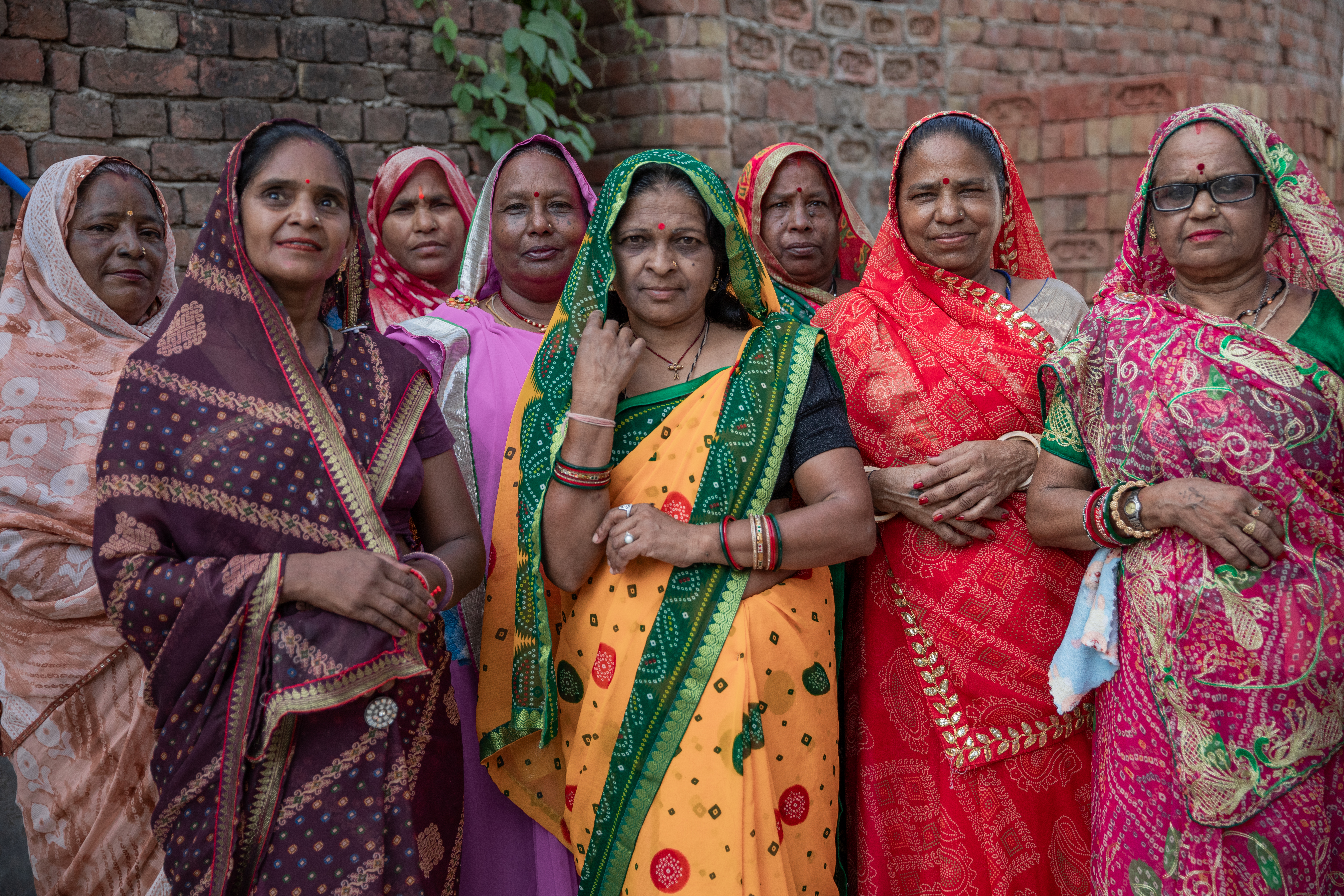
To understand how HERInsura is working for the women it serves, HERA commissioned an independent evaluation from the George Washington University Center of Excellence in Maternal and Child Health during India’s 2025 heat season. The evaluation examined how HERInsura‘s combination of insurance, cash assistance, and livelihood support affects heat-related health risks, household financial stability, and women’s resilience and capacity. It stands out as one of the first studies to measure the combined effects of climate risk financing and social protection on women’s climate resilience, financial empowerment, and health, an intersection with almost no prior evidence base, despite the outsized impact extreme heat has on women.
Researchers surveyed 1,022 women across 10 districts in Gujarat and Rajasthan, selected for their diverse climatic, infrastructure, and socioeconomic contexts. Every woman surveyed faces prolonged exposure to temperatures exceeding 45°C. The evaluation compared WCSI participants against a control group.
What the Evidence Shows
“These climate shocks like floods or heatwaves might occur for a period of 2-3 days at a stretch. But the trail of impact they leave behind is long-lasting,” stated Kokilaben, a small farmer from Anand, who, like the women surveyed in the evaluation, has seen how heat threatens every part of her life, eroding her income, worsening her health, and pushing her deeper into poverty. These women are not passive victims, however, and when given the opportunity, they will invest in measures to safeguard themselves, their families, and their income.
65% of the women surveyed who received cash assistance put the payments toward climate adaptation measures, 36% toward food and groceries, 32% toward livelihood inputs, 21% toward children’s school needs, and 21% toward machinery repairs, demonstrating that cash assistance gives recipients the flexibility to address the risks and pressures that matter most to them, from maintaining their livelihoods to meeting essential household needs.
The conversations that HERA has had with the women it works with mirror these results. Saradhaben, who has been a farmer for 5 years, discussed the critical role that the payments from WCSI played during a SEWA meeting. “The farm I worked in had no crops left (the cultivated crops were destroyed from the heat). So, no work for the last month. My [3-year-old] child fell sick, [I] could not work so I stayed home. I used the [cash assistance] money to purchase medicine and [cover] household needs.” Sarojben, who has been a SEWA grassroots leader and farmer for 6 years, was able to invest in the family’s future, “I have a grandchild in grade 1. I bought him a school uniform and books. [I] feel proud to be able to support his education.”
WCSI evaluation participants reported significantly greater control over their income, household spending, and financial decision-making, and were nearly half as likely to fall behind on essential bills such as utilities (8.7% compared with 14.9%). Importantly, the payments are doing more than compensating women after losses occur. When temperatures skyrocketed, WCSI participants were significantly more confident in their ability to protect their families, and nearly half (46.3%, compared with 32.2% in the control group) took concrete action, such as covering windows or roofs to reduce indoor heat exposure. These protective actions had a measurable effect on the women’s health.

More than half of WCSI participants (50.8%) rated their health as “excellent” or “very good” during extreme heat, compared with less than a third (32.4%) of women in the control group. This is a major achievement when considering the high cost of healthcare. As Gitaben, a headloader in Ahmedabad shared during a conversation with HERA, the private clinic that she goes to for treatment from the heat charges “I spent Rupees 4000 in total, 4 times in the last month, just for [an] IV. I took a loan for that at 10%….It’ll take 8 months to repay [the loan].” Through WCSI women gained agency over their future. Perhaps unsurprisingly then, 87% of women enrolled in WCSI said they would recommend it to family or friends, while 88% said they would enroll again.
What’s Next
The evaluation is a starting point for understanding WCSI’s impacts, not a final answer. Nor did it only surface positive news. More than one-quarter of women reported experiencing gender-based violence during periods of extreme heat, with WCSI participants reporting slightly higher instances of GBV ((28.8% vs 25.1%). As HERA has seen repeatedly, heat exacerbates and compounds existing socioeconomic and gender-based vulnerabilities, and financial protection alone is unlikely to resolve them. This underscores the need for complementary interventions addressing women’s safety, mental health, and social support alongside financial protection.
Women informal workers face extreme heat within systems — economic, social, and legal — that were never built with them in mind. Systems that leave them undercounted, underinsured, and underprotected, and that can turn a climate shock into a health crisis, a debt trap, or worse. WCSI cannot dismantle those systems on its own. But it is designed to work within them and against them at once, meeting women where the system currently fails them, while building evidence for the deeper, more lasting changes. For women like Deviben, Kokilaben, Saradhaben, Sarojben, and Gitaben, that has meant fewer hungry nights, fewer unpayable loans, and a measure of control over how they meet a crisis that keeps arriving earlier and hitting harder each year.